Korea's Bold AI Gamble: $4.5 Trillion to Reshape the Economy
South Korea is making an unprecedented bet on its economic future. With potential growth threatening to fall below 1%, the government and major conglomerates have unveiled a series of mega projects totaling up to $4.5 trillion over the next 15 years. The goal is clear: leverage the AI revolution to transform the nation into a global leader in semiconductors, robotics, and AI infrastructure. This is not just an investment; it is a declaration of economic war against stagnation.
The Three Pillars of Korea's AI Strategy
1. Regional Semiconductor Mega-Clusters
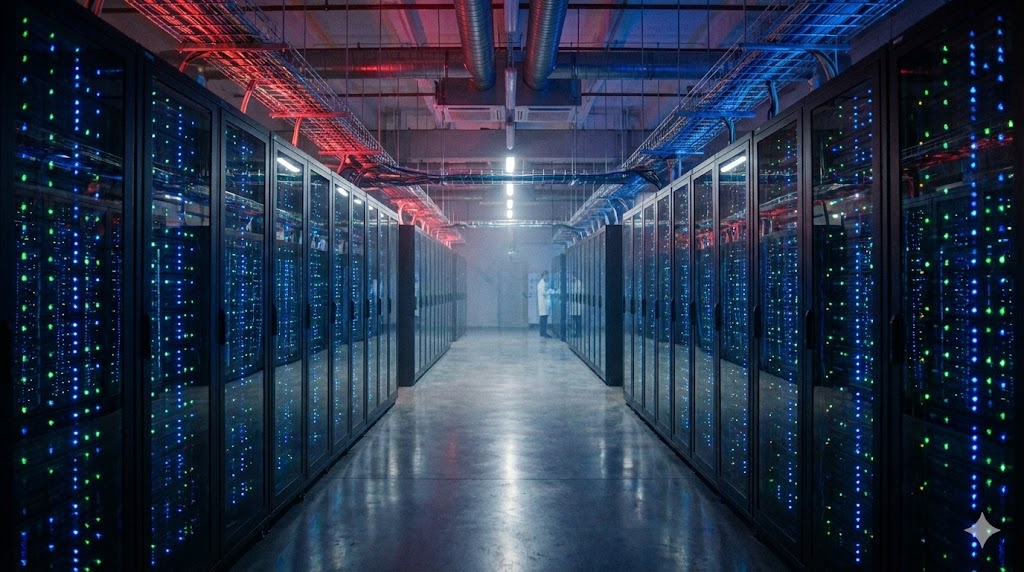
The centerpiece is the creation of massive semiconductor clusters outside the Seoul metropolitan area. The southern region (Yeongnam) will see up to $896 billion in investment, with SK Hynix committing $470 billion and Samsung $425 billion to build new memory fabrication plants and AI data centers. The central region (Chungcheong) will receive $392 billion for advanced HBM packaging facilities. This decentralization aims to turn the entire country into a production and innovation hub.
2. Physical AI and Robotics Leadership
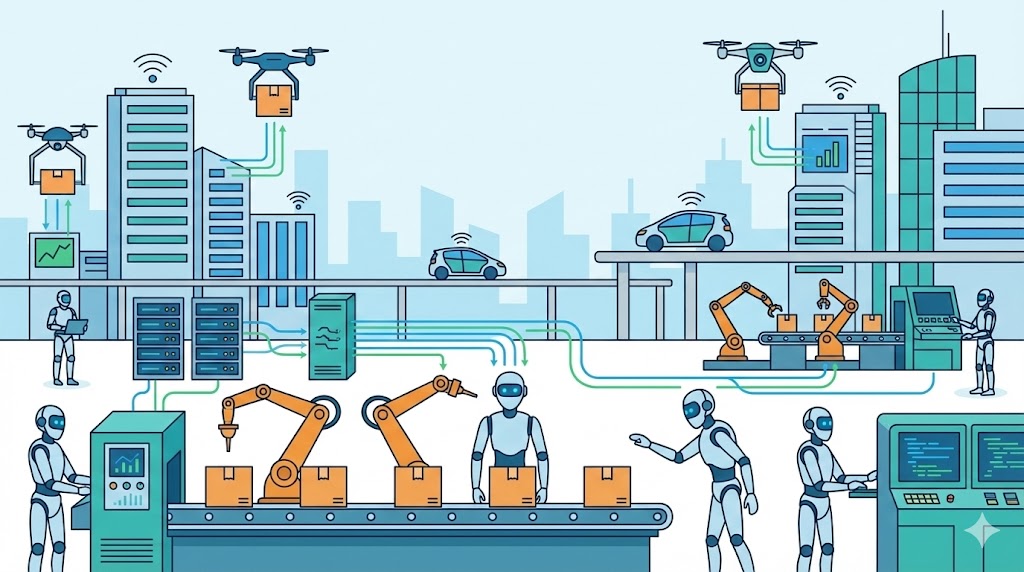
Korea aims to leap from a nation that uses robots well to one that builds them best. The target is to become a top-3 global power in physical AI, with an ambitious goal of reaching number one. Public sector demand will be created first to seed the market, while production bases will be established in Saemangeum and Daegu-Gyeongbuk. Existing automotive parts manufacturers will be supported to transition into robot production.
Grok 3.5 Leaked Will AI Finally Take Over Software Development Jobs?
3. Gigawatt-Scale AI Data Centers
Korea plans to build AI data centers across the country with a total capacity of 18.4 GW by 2035 — equivalent to the power consumption of over 18 million households. This would be the largest AI data center capacity in the Asia-Pacific region. The plan includes a dedicated electricity rate system for AI data centers and differential regional electricity pricing to encourage investment outside the capital area.
Corporate Commitments and Market Reactions
Samsung and SK's Massive Investment Plans
Samsung Electronics has disclosed a $2.45 trillion investment plan through 2040, with $2.1 trillion dedicated to semiconductors. SK Hynix announced a $1.1 trillion mid-to-long-term strategy, plus an additional $1 trillion AI data center project led by SK Telecom. Combined, these commitments could reach $4.5 trillion.
| Company | Investment Area | Amount (USD) | Timeline |
|---|---|---|---|
| Samsung Electronics | Semiconductors (Yongin, Gwangju) | $2.1 trillion | 2026-2040 |
| Samsung Electronics | Other (AI, Robotics, Display) | $350 billion | 2026-2040 |
| SK Hynix | Semiconductors (Yongin, Cheongju, Yeongnam) | $1.1 trillion | Mid-to-long term |
| SK Telecom | AI Data Center (15 GW) | $1 trillion | 2029-2045 |
| Total | $4.5 trillion |
Market Sentiment and Concerns
Global investors are watching closely. Michael Burry, known for his bearish bets, has taken short positions against Caterpillar and Micron Technology, arguing that the AI infrastructure buildout may be overbuilt. Meta's recent comments about potentially selling excess computing capacity have also raised questions about whether AI data center demand is sustainable. However, Korean semiconductor stocks have shown extreme volatility, swinging double digits on any news.
Bigme HiBreak Review A Color E-ink Smartphone with Call Recording
Space and Aerospace Ambitions
Beyond semiconductors and robots, Korea is also targeting space. The national space committee announced plans for a K-Starlink satellite communication network by 2035, a lunar landing by 2030, and an AI-based space data center. The goal is to create a southern coast aerospace belt encompassing launch vehicles, satellites, and aircraft manufacturing.
What This Means for the Global AI Race
South Korea's $4.5 trillion investment plan represents one of the largest coordinated industrial bets in modern history. If successful, it could transform the country into an indispensable hub for AI semiconductors, robotics, and data center infrastructure. However, significant risks remain: semiconductor market cyclicality, potential overcapacity, and execution challenges across multiple simultaneous mega projects.
The key takeaway is that Korea is no longer waiting for the future — it is building it. For global investors and tech observers, this is a development that demands attention.
📅 Information Date: July 2025