The AI landscape is shifting at an unprecedented pace. This week alone brought rumors of a new GPT model, a major hardware partnership for OpenAI, and a surprising strategic move by Apple. For professionals and enthusiasts alike, staying updated is no longer a luxury but a necessity. This report consolidates the key announcements, from new open-source models to corporate strategy changes, providing a data-driven overview of the current state of artificial intelligence.
🧠 OpenAI Ecosystem: GPT-5.3 and Beyond
The GPT-5.3 'Garlic' Rumor
According to multiple community sources, OpenAI's next model, code-named 'Garlic' (GPT-5.3), is expected to be released within the next week or two. The previous checkpoint, 5.2, is now considered an early checkpoint. This speculation is fueled by Sam Altman's recent statement, "Very Fast Codex is coming," suggesting a significant speed boost for coding tasks.
Cerebras Collaboration for Speed
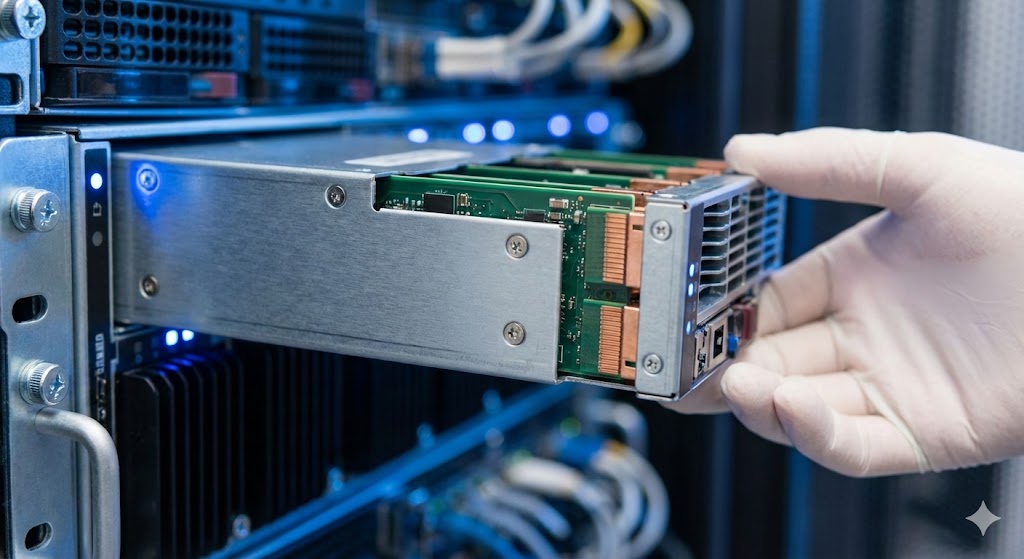
OpenAI officially announced a partnership with Cerebras, a company specializing in ultra-large inference chips. Cerebras' technology enables massive parallel processing, achieving speeds of up to 1,446 tokens per second on certain models. Integrating this with OpenAI's next model could result in inference speeds dramatically faster than current GPU-based solutions. This partnership is a direct response to the growing need for real-time AI applications.
OpenAI's Advertising & Subscription Shift
OpenAI will begin testing advertisements in its free and low-tier ChatGPT plans within the next few weeks. Ads will be clearly labeled and will not influence the AI's responses. Advertisers will not have access to user chat history. This move is seen by many analysts as a necessary financial step, as Sam Altman previously stated in a 2024 interview that advertising would be a "last resort." In parallel, OpenAI launched a new $8/month subscription tier offering 10x more messages, file uploads, and unlimited access to the 5.2 instance, signaling a push towards a tiered, ad-supported model.
🍏 Apple's Strategic Pivot: Google Gemini Inside Siri
Why Google Over OpenAI?
In a surprising development, Apple has decided to integrate Google's Gemini AI into Siri, rather than its previously rumored partner, OpenAI. The new Siri will function as a wrapper for Gemini, utilizing Google's cloud technology for complex tasks. According to insiders, OpenAI actively rejected Apple's offer last fall, choosing to focus on developing its own dedicated AI hardware device instead of becoming a "custom model provider."
Technical and Strategic Rationale
Apple's decision is likely based on Google's superior portfolio of lightweight, on-device models like Gemma. While OpenAI excels at large-scale models, Google's open-source Gemma models are optimized for edge computing, making them a better fit for Apple's private cloud computing architecture and on-device processing. This integration will allow Siri to access user context across Photos, YouTube, and Search for personalized responses.
New Open Source Models: TranslateGemma
Google also released TranslateGemma, a new open-source translation model available in 4B, 12B, and 27B parameter sizes. The 4B model is optimized for mobile edge devices, the 12B for consumer laptops, and the 27B for high-end GPUs. According to benchmark data, TranslateGemma achieves a lower error rate than the larger Gemma 3 27B model, offering superior performance with fewer parameters.
📊 Performance Comparison: Key AI Models
| Model | Parameters | Primary Use Case | Key Feature |
|---|---|---|---|
| GPT-5.3 (Rumored) | Unknown | General AI & Coding | Ultra-fast inference via Cerebras |
| TranslateGemma 4B | 4 Billion | On-device Translation | 55 languages, mobile optimized |
| Flux 2 Kalin (Open Source) | 4B / 9B | Image Generation | Sub-1 second generation & editing |
| Pocket TTS | 700 Million | Text-to-Speech | Real-time voice cloning on CPU |
🤖 Robotics & Automation Updates
Figure AI's Humanoid Robot
A new video from Figure AI shows its humanoid robot running alongside humans with remarkable naturalness. The gait and pacing are nearly indistinguishable from a human runner, marking a significant leap in bipedal locomotion control.
Boston Dynamics & Hyundai
Hyundai Motor Group appointed Milan Kovac, former head of Tesla Optimus engineering, as the Chief Social Officer of Boston Dynamics. He will oversee the Atlas humanoid robot and all business segments, providing AI and robotics advisory to the parent company.
Claude Cowork: AI for Non-Developers
Anthropic launched Claude Cowork, a new feature designed for non-developers. It can summarize meetings, organize files, and clean up desktops by understanding context. Notably, Anthropic built the entire Cowork feature in just 10 days, using 100% Claude Code. However, a security vulnerability was discovered where the tool could upload user files to external accounts, highlighting the risks of rapid AI development.
 This week's news confirms that the AI industry is entering a new phase of specialization and consolidation. OpenAI is diversifying revenue with ads and hardware partnerships, Apple is pragmatically choosing the best technology for its ecosystem, and open-source models are closing the gap with proprietary solutions in niche areas like translation and TTS. The race is no longer just about who has the biggest model, but who can integrate AI most effectively into everyday life.
📅 Information as of: October 26, 2023
For a deeper dive into the hardware powering these advancements, see our AI Notebook Performance Comparison Guide.
Also related: The History of Measurement How Standards Shaped Civilization & Modern Science