CES 2026 has officially kicked off the year with a bang, revealing a wave of next-generation gaming hardware that promises to redefine performance and immersion. From record-breaking CPU clock speeds to a revolutionary take on virtual displays, this year's show has something for every hardcore enthusiast. This roundup covers the three most impactful announcements: AMD's Ryzen 9850X3D, Gigabyte's flagship RTX 5090, and ASUS's bold entry into AR gaming.
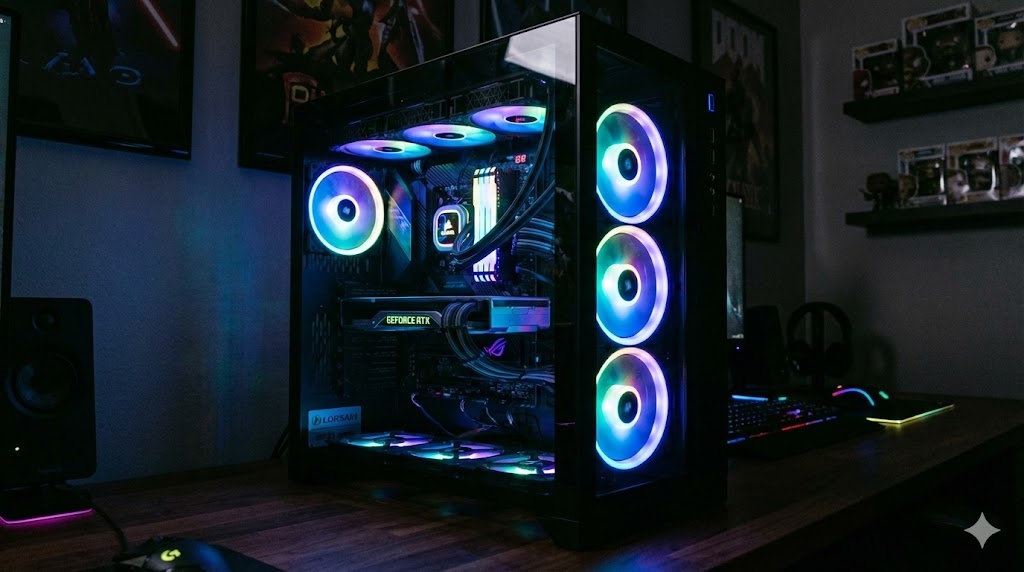
AMD Ryzen 9850X3D: A New Benchmark for Gaming CPUs
The rumors were true. AMD officially unveiled the Ryzen 9850X3D at CES 2026, and the headline feature is a staggering 400MHz boost clock increase over the previous 9800X3D, reaching up to 5.6GHz. While the core, thread, and CCD architecture remain unchanged, this clock speed jump on the same manufacturing process is a significant engineering feat. For gamers building a new rig in 2026, this CPU is poised to be the definitive choice for high-frame-rate gaming. According to leaked retail listings, the launch is expected in late January with a rumored price point around $500.
Gigabyte RTX 5090 Infinity: A Mechanical Masterpiece
Gigabyte celebrated its 40th anniversary with the RTX 5090 Infinity, a truly unique custom design. Based on the PCB of NVIDIA's Founder's Edition, Gigabyte engineers completely reimagined the cooling solution. Instead of a traditional layout, the card features two large fans on the sides with a smaller, hidden 'Overdrive' fan in the center, creating a triple-fan setup. The entire shroud is made of metal, giving it a premium, mechanical aesthetic. While not a limited edition, production volume is expected to be low. A release is targeted around April, and the card is confirmed for the Korean market.

ASUS ROG XREAL R1: The 240Hz AR Gaming Glasses
Perhaps the most intriguing product of the show is the ASUS ROG XREAL R1. This device aims to solve the 'big format gaming display' puzzle by using AR technology to project a virtual 171-inch screen at a 240Hz refresh rate. ASUS claims the display covers 95% of the human eye's focal area, simulating a screen viewed from 4 meters away. The glasses also feature integrated sound from Bose and dynamic lens transparency that darkens when focusing on the virtual screen and clears to see the real world.
Comparison Table: ASUS ROG XREAL R1 vs. Traditional High-End Monitor
| Feature | ASUS ROG XREAL R1 | 48-inch 4K OLED Monitor |
|---|---|---|
| Screen Size (Perceived) | 171 inches | 48 inches |
| Refresh Rate | 240 Hz | 120-144 Hz |
| Portability | High (Wearable) | Very Low (Fixed) |
| Setup Complexity | Minimal | High (Desk Space Required) |
| Price (Estimated) | >$1,500 | $1,000 - $2,000 |
This technology is still in its early adopter phase. The XREAL's current top-tier model already exceeds $1,300, and the ROG collaboration with Bose will likely push the price higher. It supports PC, console, and mobile devices, making it a versatile but expensive niche product for 2026. Reddit users have pointed out that while the concept is exciting, motion sickness in AR remains a barrier for many.
 The 2026 gaming hardware landscape is shaping up to be incredibly competitive. AMD is pushing CPU clock speeds to new heights, Gigabyte is redefining GPU aesthetics, and ASUS is pioneering a new form factor with AR glasses. While prices are generally on the rise, these innovations offer exciting possibilities for enthusiasts. For a different perspective on mobile computing, check out our HP OmniBook X Flip 14 Review. The future of gaming is here, and it's more diverse than ever.
📅 Information Date: 2024-05-24